Meg’s Monster Mobile Review: A Story-Led RPG with a Tender Core
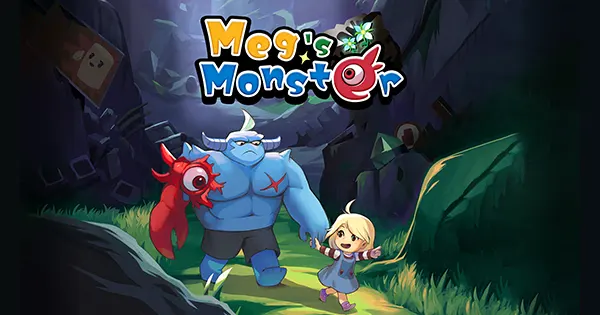
Meg’s Monster reached iOS and Android in 2026 after first earning attention on computers and consoles as a compact, story-focused role-playing game. Developed and published by the Japanese studio Odencat, the mobile edition keeps the original tale of an almost indestructible monster protecting a lost child, while reshaping the controls for portrait play and touch input. It is not designed around endless upgrades, large maps or complicated character builds. Its main purpose is to tell a carefully paced story about fear, trust, memory and the gradual bond between two characters who should have little in common. That focus makes it particularly relevant to players who value emotional writing more than mechanical depth, although the simple combat and linear structure will not suit every RPG fan.
A Small Underworld Tale with Enormous Emotional Stakes
The mobile version launched internationally on 7 May 2026, three years after the original release of Meg’s Monster on PC, Nintendo Switch and Xbox systems. The premise is established quickly. A human girl named Meg wakes in the Underworld, a bleak place inhabited by monsters and mutants. She is found by Roy, a huge blue ogre who prefers eating a foul substance called Magic Tar, and his more talkative friend Golan. The situation changes when the pair realise that Meg’s crying is not merely upsetting. Her tears make the sky turn red, shake the ground and threaten the destruction of the entire world. Keeping her calm becomes a matter of survival, while returning her to her mother becomes the central goal.
This setup sounds like a dark joke, and the game initially uses it that way. Roy is physically powerful but emotionally blunt, Golan speaks with the confidence of someone who rarely has a complete plan, and the Underworld’s authorities are often more foolish than frightening. The humour prevents the early chapters from becoming heavy, yet the writing does not treat Meg as a simple device for creating danger. She behaves like a frightened child who needs safety, routine and reassurance. Small conversations, visits to Roy’s sparse home and moments spent playing with toys gradually make her feel like a person rather than a mission objective.
The story remains relatively short and direct, but it carries more narrative weight than its modest scale suggests. What begins as an escort mission slowly raises questions about Meg’s arrival, the nature of the Underworld and the history connecting several members of the cast. Odencat avoids filling the journey with long explanations at the start. Important details appear through dialogue, character behaviour and later revelations, allowing the emotional meaning of earlier scenes to change as the plot develops. A review should not reveal those turns, because much of the game’s impact depends on the player recognising how apparently simple moments fit together near the end.
Why Roy and Meg Make the Story Work
Roy is the most important reason the central relationship feels convincing. He is introduced as a creature with little patience for humans, conversation or responsibility, and his enormous strength makes most threats look trivial. His emotional limitations are far more significant than his physical abilities. He does not suddenly become gentle after meeting Meg. Instead, care appears through reluctant actions: carrying her, finding somewhere safe to rest, tolerating games he does not understand and placing himself between her and danger. The gradual nature of this change gives the bond credibility and prevents the story from relying on instant sentiment.
Meg also influences the tone without behaving like an adult written in a child’s body. She asks direct questions, forms attachments quickly and responds to frightening situations with uncertainty rather than heroic confidence. Her vulnerability creates the game’s stakes, but her curiosity and affection give Roy reasons to change. Golan adds warmth and comic timing, while the wider cast of officials, guards, rivals and former enemies makes the Underworld feel more socially complex than its small number of locations might suggest. Optional side events add short character stories and sometimes allow defeated opponents to appear in a more sympathetic light.
The emotional scenes are effective because the game spends time on ordinary interaction before asking for a strong response. Playing with a toy, sharing food or listening to a clumsy conversation may appear unimportant when it happens, yet these moments establish habits and memories that matter later. The writing can be openly sentimental, and some players may find individual lines predictable, but the overall progression is well controlled. Humour, discomfort and tenderness are mixed rather than separated into obvious chapters. By the final section, the relationship between Roy and Meg has been built through enough specific incidents that the emotional payoff feels earned instead of imposed.
How Meg’s Monster Feels on a Phone
Odencat redesigned the mobile edition for a vertical screen and simple tap controls. Movement between interactive points, dialogue progression and menu selection can all be handled with one hand, which suits short sessions on a phone. The portrait layout places characters and text within a narrow field without reducing the expressive pixel animation to a tiny strip. This is not an action game that depends on precise movement, so touch input does not introduce the usual problems associated with virtual buttons. The result is a comfortable adaptation rather than a desktop layout reduced to fit a smaller display.
Most of the journey follows a clear sequence. Roy and his companions travel between locations, speak to residents, inspect important objects, complete short side scenes and enter scripted battles. There are no random encounters, large areas to search or long periods of collecting materials. This keeps attention on the characters and ensures that each fight has a reason to exist within the story. It also means that player freedom is limited. Choices rarely change the main direction of the plot, and people seeking extensive exploration, multiple endings or a highly customisable party may find the structure restrictive.
The mobile release is free to install and uses both advertising and in-app purchases. Odencat states that the story can be completed either by paying or by watching adverts, giving players a choice between spending money and accepting interruptions. This approach makes the opening accessible, but it also creates a different rhythm from the original premium release. Players who want an uninterrupted emotional story are likely to prefer the paid route, while those willing to watch adverts can reach the end without buying the full experience at the start. Exact prices can vary by region and store, so the purchase screen should be checked before committing.
Turn-Based Battles Built Around Meg’s Emotions
Combat uses a turn-based system, but its central resource is not Roy’s health. He begins with 99,999 hit points and can withstand attacks that would destroy an ordinary hero. The real danger is Meg’s heart meter. Seeing Roy hurt causes her distress, and if that meter reaches zero, she cries and the world ends. This reverses the usual protective role found in RPGs. Roy is not trying to keep a fragile party member from being struck directly; he is managing how much fear she can endure while still defeating the enemy in front of them.
Roy can attack, defend and use special options introduced during particular encounters. Toys found through story scenes can calm Meg and restore her heart, turning earlier moments of play into practical battle tools. Some fights also include small puzzles, timing challenges or unusual enemy behaviour, so the correct response is not always to select the strongest punch. The system is easy to understand and asks for moderate planning without demanding knowledge of complex statistics. It supports the story’s central idea: Roy’s greatest responsibility is not winning quickly, but recognising and responding to Meg’s emotional state.
The limitation is that the battles are heavily scripted and offer little room for personal strategy after their solutions become clear. There is no broad equipment system, deep skill tree or party-building layer, and several later enemies can take longer to defeat than their tactical complexity justifies. Players primarily interested in combat may begin to see fights as pauses between story scenes. However, the simplicity also prevents grinding and keeps the game approachable for people who do not usually play Japanese-style RPGs. The battle system is best viewed as an interactive extension of the narrative rather than the main source of long-term challenge.
Art, Music and the Added Mobile Content
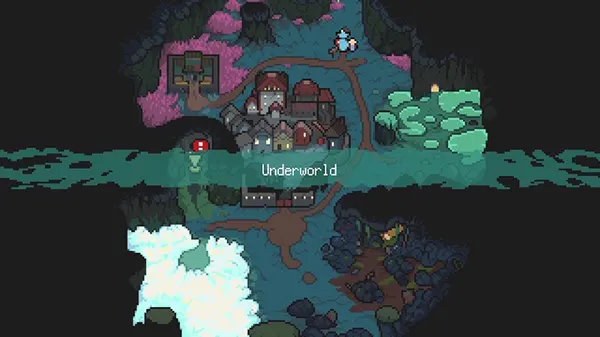
The visual style uses colourful pixel art to create an Underworld that is unpleasant in concept but often charming in appearance. Roy’s large frame, Meg’s small movements and Golan’s exaggerated expressions communicate personality without detailed animation. Backgrounds are compact, yet locations such as the salvage yard, monster settlement, flower field and Roy’s home have distinct moods. The contrast between cute character designs and references to danger, death and human-eating creatures supports the game’s balance of comedy and unease. On a phone, the strong silhouettes and readable facial expressions are more important than fine detail, and they remain clear in portrait orientation.
Reo Uratani’s music contributes heavily to the emotional pacing. The original soundtrack contains 21 main-game tracks and uses unusual textures to define the Underworld, including percussion created from discarded objects such as metal, wood and household items. Softer piano and string passages accompany intimate scenes, while more forceful themes give battles energy without making the game feel harsher than its visual tone. The score does not simply signal sadness or danger; recurring melodies help connect memories and relationships across the story. For players who respond strongly to music in narrative games, the soundtrack is one of the most persuasive parts of the experience.
The 2026 mobile edition also brings the additional episode Lost Memories and other new material associated with the later version of the game. Lost Memories was released separately for the original editions in December 2025 and expands the world through further character-focused scenes. Its presence gives returning players a reason to consider the phone release, while newcomers receive a broader version of the story than the one available at the initial 2023 launch. The extra material should still be approached after the main narrative, because its meaning depends on knowledge of the cast and events that the core game introduces first.
Who Should Play Meg’s Monster Mobile in 2026?
Meg’s Monster is most suitable for players who want a compact narrative RPG that can be completed without grinding, complicated menus or long preparation between story scenes. It is also a sensible choice for people who normally prefer visual novels or adventure games but would like a little more interaction. The touch controls are easy to learn, the chapters fit mobile sessions well and the central relationship is given enough time to develop. Players who enjoy stories about unlikely guardians, found family and memories that gain new meaning are the audience most likely to value what Odencat has made.
It is less suitable for anyone expecting a traditional mobile RPG built around daily tasks, character collection, competitive modes or years of progression. It also offers limited challenge for experienced turn-based players, and its linear route leaves little reason to replay immediately once the main revelations are known. The advertising option may interrupt the intended mood, especially during an emotionally important sequence, although the purchase route addresses that problem. Some late battles are slower than necessary, and the game occasionally states feelings that its earlier scenes have already communicated effectively.
Even with those weaknesses, Meg’s Monster remains a strong example of a game whose mechanics, art and writing support the same emotional idea. Its battle system turns empathy into a resource, its short domestic scenes make later events matter, and its restrained length prevents the relationship at its centre from being buried under unnecessary content. Reception remained notably positive in 2026, with the established computer version holding a 96 per cent positive Steam rating from more than 1,100 reviews, while the new phone editions also received strong early user scores. For story-focused players, the mobile release is not merely a convenient conversion; it is a carefully adapted edition of a small RPG that understands why specific memories can carry more weight than a large amount of content.