Consume Me: Review of an Unusual Mobile Game
Mobile gaming is often associated with action titles, strategy games, puzzle challenges, and role-playing adventures. Consume Me takes a very different direction. Developed by Jenny Jiao Hsia and AP Thomson, this independent title focuses on everyday life, personal expectations, self-image, and the pressure of modern society. Rather than asking players to defeat enemies or build empires, the game explores the challenges of balancing school, family, friendships, hobbies, and personal wellbeing. Its unusual concept has attracted attention from critics and players looking for experiences that go beyond traditional mobile entertainment.
A Different Approach to Mobile Gaming
Consume Me places players in the role of Jenny, a teenager attempting to navigate the final years of school while dealing with social expectations and personal goals. The gameplay revolves around managing limited time and energy. Every decision affects how the character develops, making routine activities surprisingly meaningful.
Unlike many simulation games that reward constant optimisation, Consume Me deliberately highlights the difficulty of meeting every expectation. Players quickly discover that there is never enough time to satisfy every demand. This design choice reflects real-life experiences rather than idealised game mechanics.
The game combines humour with thoughtful observations about growing up. Conversations, events, and personal challenges create a believable environment where success is not always measured by points or achievements. Instead, progress is tied to personal growth and understanding.
How Everyday Activities Become Gameplay
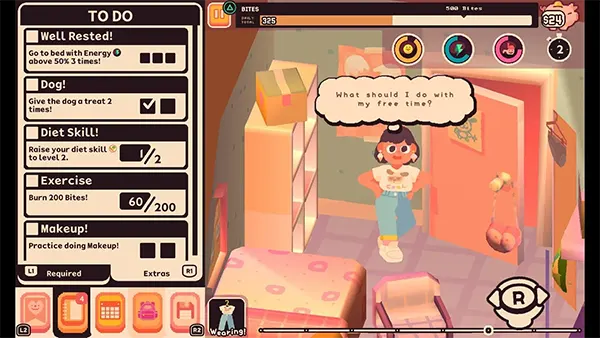
Many of the game’s mechanics are based on ordinary tasks. Studying for exams, spending time with friends, participating in extracurricular activities, and maintaining personal health all compete for attention. Each activity consumes valuable resources, forcing players to make difficult choices.
This system creates a constant sense of tension. Investing too much time in academics may improve grades but can negatively affect relationships or emotional wellbeing. Focusing entirely on social life may create different challenges. As a result, every playthrough develops in its own way.
The simplicity of these mechanics makes the experience accessible, while the underlying systems provide significant depth. Players are encouraged to reflect on priorities and consequences rather than simply chasing the highest score.
Visual Design and Narrative Style
Consume Me uses a colourful hand-drawn art style that complements its personal storytelling. Character portraits, menus, and environments are intentionally expressive, helping communicate emotions without relying on complex graphics technology.
The visual presentation contributes to the game’s unique identity. Instead of pursuing realism, the developers focus on personality and atmosphere. This approach allows the narrative themes to remain at the centre of the experience.
Dialogue plays an equally important role. Conversations often mix humour with uncomfortable truths about social pressure, body image, academic performance, and family expectations. The writing feels authentic because it reflects situations that many players recognise from their own lives.
The Themes That Make Consume Me Stand Out
One of the most distinctive aspects of the game is its willingness to address subjects that are rarely explored in mobile gaming. Topics such as self-worth, perfectionism, social comparison, and cultural expectations are integrated directly into gameplay and storytelling.
Rather than presenting simple solutions, Consume Me shows how complicated these issues can be. Different choices lead to different outcomes, but there is rarely a perfect answer. This creates a more realistic representation of personal growth and decision-making.
The game also demonstrates how independent developers can use interactive storytelling to discuss meaningful subjects. By combining relatable experiences with engaging mechanics, Consume Me offers something that differs significantly from mainstream mobile releases.
Reception and Relevance in 2026
By 2026, Consume Me continues to be recognised as an example of how games can address personal and social topics in creative ways. It has attracted attention within independent gaming communities and has been praised for its originality and emotional honesty.
Many players appreciate the fact that the game avoids traditional power fantasies. Instead of becoming stronger, richer, or more influential, the objective is to understand limitations and make thoughtful decisions within realistic constraints.
The title also reflects broader trends within the gaming industry. Independent developers increasingly explore themes related to mental health, identity, and personal experience, demonstrating that games can serve as both entertainment and a form of artistic expression.
Who Will Enjoy Consume Me?
Consume Me is particularly suitable for players who value story-driven experiences and character development. Those looking for fast-paced action may find its slower pace unusual, but players interested in narrative depth are likely to appreciate its design.
Fans of life simulations, interactive stories, and independent games often describe the title as memorable because it presents familiar situations from a fresh perspective. The choices feel personal, and the outcomes encourage reflection long after a session ends.
As mobile gaming continues to diversify, Consume Me demonstrates that smaller projects can deliver experiences that are every bit as meaningful as large-budget productions. Its combination of thoughtful themes, engaging systems, and distinctive storytelling makes it one of the more unusual mobile games available in 2026.