
EA College Football Mobile 27: Controls, Matches and Sports Mechanics on Smartphones
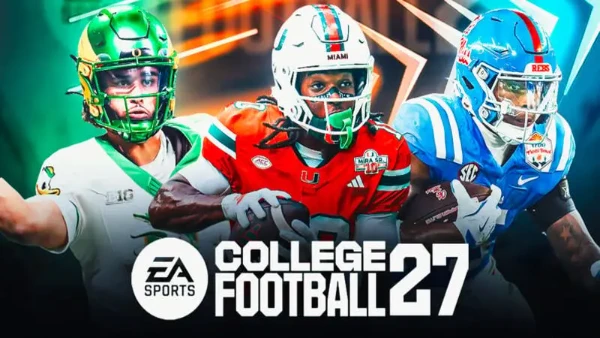
EA SPORTS College Football Mobile 27 brings American college football to smartphones, combining tactical decision-making, touchscreen controls, competitive matches and university team management. Released on 9 July 2026 for Android and iOS, the game was developed specifically for mobile devices using the Frostbite engine rather than being a direct conversion of the console edition. Players can represent officially licensed universities, assemble squads featuring real college athletes and participate in challenges inspired by the American football season. By November 2026, the game had expanded considerably through gameplay updates, competitive events and the introduction of Dynasty Rush, giving players more opportunities to develop their tactical skills and manage their favourite college programmes.
Gameplay and Touchscreen Controls in College Football Mobile 27
College Football Mobile 27 retains the fundamental principles of American football while adapting the pace of matches to smartphone gaming. Players alternate between offensive and defensive situations, select tactical formations and execute individual plays. The objective on offence is to advance the ball towards the opposing end zone, while defensive play requires restricting passing opportunities, stopping running backs and preventing opponents from gaining additional territory. The mobile format places particular emphasis on individual possessions and decisive moments rather than requiring players to complete lengthy matches every time they launch the application. This approach suits shorter gaming sessions without removing the strategic importance of play selection.
The touchscreen interface provides access to player movement, passing, defensive actions and tactical commands without requiring a physical controller. Offensive success depends on identifying available space, recognising defensive positioning and releasing the ball before pressure reaches the quarterback. Running plays involve a different set of decisions, as players must follow blocking patterns and adjust their movement when defenders close available gaps. Repeatedly selecting the same offensive strategy can become ineffective against stronger opposition, particularly when defensive formations are well suited to stopping predictable passing routes or running attempts.
Electronic Arts introduced an additional simplified control option in its update of 18 September 2026. This setting reduces the number of available actions and visible buttons, with the most noticeable changes affecting defensive gameplay. The update also introduced the ability to reverse an offensive play before the snap through the View Play and Flip Play commands. Players using standard defensive controls received a dedicated Switch Player button in place of the previous Assist command. These changes make the interface more approachable for newcomers while preserving greater control over individual actions for players who prefer a more demanding experience.
Passing, Running and Defensive Decision-Making
Passing requires more than identifying a receiver with a high individual rating. The positioning of defensive backs, the direction of a receiver’s route and the amount of time available to the quarterback all influence the likelihood of completing a play. Short passes towards relatively open receivers can help maintain possession and create manageable situations on subsequent downs. Longer attempts offer greater territorial gains but may expose the offence to interceptions when defenders have sufficient time to react. Players should consider the situation on the field rather than treating every possession as an opportunity to attempt a spectacular touchdown.
Running plays are particularly useful when the offensive line creates space between defenders or when only a small territorial gain is required. Moving towards an available gap is generally more effective than attempting to outrun several defenders simultaneously. The same principle applies when a receiver catches the ball and attempts to gain additional yards. Changes of direction should serve a clear purpose, such as avoiding an approaching opponent or moving towards an area with fewer defenders. Unnecessary movement can give the opposing defence additional time to close the space and complete a tackle.
Defensive gameplay requires awareness of the entire formation rather than focusing exclusively on the player carrying the ball. Following the quarterback too aggressively can leave receivers unprotected, while moving defensive players away from their positions may create opportunities for running attacks. The September update allows players to select a specific defender by tapping directly on that athlete before the snap. Once play begins, tapping elsewhere on the field switches control to the nearest defender. The ability to change the controlled athlete makes positioning more manageable, particularly when responding to an unexpected pass or a running back moving towards the sidelines.
Match Formats and Competitive Game Modes
College Football Mobile 27 offers several ways to participate in American football without relying on a single traditional match format. CFB Blitz concentrates on short challenges built around particular objectives and recognisable match situations. These include defending territory close to the end zone, attempting a comeback within a limited period and completing important offensive possessions. The mode provides an opportunity to practise tactical decisions under pressure while earning resources that contribute to Ultimate Team progression. Its structure is particularly suitable for players who have enough time for several individual plays but cannot commit to an extended match.
The Tower introduces a different challenge through a sequence of increasingly difficult stages. Successful performances allow players to progress further and collect Tower Tickets, which can be exchanged for a changing selection of rewards. An unsuccessful stage resets the current attempt, making consistency more important than occasional exceptional performances. A squad with a strong passing game but significant defensive weaknesses may struggle as the difficulty increases. Building a balanced team and adapting tactics to individual objectives can therefore be more valuable than concentrating resources exclusively on the highest-rated offensive athletes.
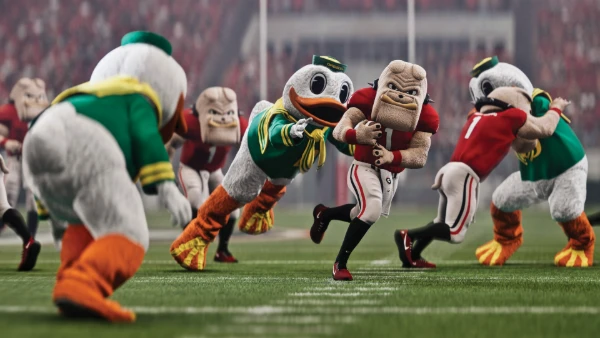
Mascot Mashup provides a less conventional interpretation of college football. Instead of concentrating entirely on realistic athletic performances, the mode features university mascots, exaggerated physical interactions and arcade-style action. Its distinctive animations and rules separate it from standard competitive encounters, although associated challenges can also contribute rewards towards Ultimate Team development. The contrast between Mascot Mashup and more conventional football modes gives players a choice between tactical competition, structured practice and casual entertainment without having to switch to another sports game.
Unlimited Arena and Ultimate Team Competition
Unlimited Arena is an asynchronous competitive mode in which players challenge squads assembled by other users. The opposing defence is controlled by the computer rather than directly by another person during each possession. Weekly competitions are divided into four groups according to overall team ratings, providing a framework for encounters between squads of comparable strength. Matches involve three rounds of offensive possessions, making efficient scoring particularly important. Unlike conventional real-time multiplayer, this arrangement allows participants to compete without requiring both users to remain connected and actively control their teams simultaneously.
Weekend Unlimited Arena tournaments introduce additional competitive considerations. Overall team ratings influence matchmaking, while scoring margins affect performance in tournament rankings. Simply defeating an opponent may not be sufficient to achieve a particularly strong leaderboard position. Players must consider how efficiently they convert possessions into points and avoid unnecessary turnovers. A reliable offensive strategy can produce better results over multiple encounters than repeatedly attempting difficult passes in pursuit of larger gains. Squad construction also becomes important because effective athletes at several positions provide greater tactical flexibility.
Ultimate Team connects these competitive activities with long-term roster development. Players collect athlete items, improve their line-ups and use training resources to strengthen particular positions. Team chemistry adds another consideration when selecting athletes, meaning that the highest individual rating does not necessarily determine the most suitable addition to a squad. A dependable offensive line, capable receivers and a balanced defence can provide greater practical value than concentrating improvements on a single prominent quarterback. Assessing which positions repeatedly cause difficulties during matches is a useful way to determine where training resources and available rewards should be directed.
Dynasty Rush and College Football Management in 2026
Dynasty Rush represents one of the most significant additions to College Football Mobile 27 during its first season. Released in November 2026, the mode places players in charge of a university football programme through structured management campaigns. The experience extends beyond individual matches by introducing recruitment, operating budgets, athlete development and decisions affecting the reputation of the selected school. Different campaign conditions can impose restrictions on available resources or reduce initial school ratings, creating distinct challenges for players attempting to rebuild struggling teams or maintain the competitive position of established universities.
The Living Narrative Event System introduces changing circumstances throughout the season. Coaches may encounter injured athletes, academic absences, disagreements within the squad and questions from the media. Decisions can affect morale, institutional prestige and subsequent performances. For example, selecting an injured athlete for an important fixture presents a different management consideration from allowing that player additional recovery time. Some choices require expenditure from the operating budget or the use of recruitment hours, creating competition between immediate sporting priorities and the longer-term development of the programme.
Recruitment is another important component of Dynasty Rush. The recruiting board identifies areas of the squad requiring attention, helping managers allocate their scouting resources according to positional needs. Real university schedules provide the framework for seasonal campaigns, while conference standings and national rankings change as the competition progresses. Permanent improvements are available through the Training Facility, where the Weight Room supports attribute development across positional groups and the Film Room strengthens collected skill cards. These improvements can benefit subsequent campaigns, allowing players to retain meaningful progress when beginning a new management run.
Seasonal Events, Device Compatibility and the Mobile Gaming Experience
Seasonal content connects the game with developments in real American college football. The Stars of the Week feature recognises outstanding real-world performances, while themed events introduce additional athlete items and progression opportunities. The Ranksgiving event, announced on 20 November 2026, includes challenges associated with the Thanksgiving period and college football rivalries. Featured athletes include Darren McFadden, Bray Hubbard and A’Mauri Washington. According to the published event schedule, Ranksgiving continues until 4 December 2026, illustrating how the mobile game regularly introduces time-limited activities alongside its established competitive and management modes.
Field Passes provide a separate seasonal progression system based on completing objectives and participating in available activities. Rewards can include Training Points, College Cash, player packs and resources required for particular events. Themed Live Programs introduce their own objectives and event-specific currencies, so progression in one activity should not automatically be treated as progression in another. Players benefit from checking the requirements of individual challenges before spending accumulated resources. Prioritising rewards that address existing weaknesses in a squad can provide more practical value than collecting every available athlete item or pursuing every optional milestone.
Device compatibility remains an important consideration because the Frostbite-powered game has relatively demanding hardware requirements. EA’s compatibility guide, updated on 11 November 2026, includes devices such as the iPhone 13 Pro, iPhone 16, Samsung Galaxy S23, Galaxy S25 and Xiaomi 15. However, not every smartphone released within the same generation is supported. Checking the official compatibility information before installation is advisable, particularly for owners of older or mid-range devices. With its adjustable controls, short competitive challenges, roster development and university management campaigns, College Football Mobile 27 offers several distinct ways to experience American football on a smartphone, with tactical understanding remaining an important part of progression across its main game modes.