
Neverness to Everness Mobile: Can an Urban Open World Meet Expectations After the Gacha Wave?
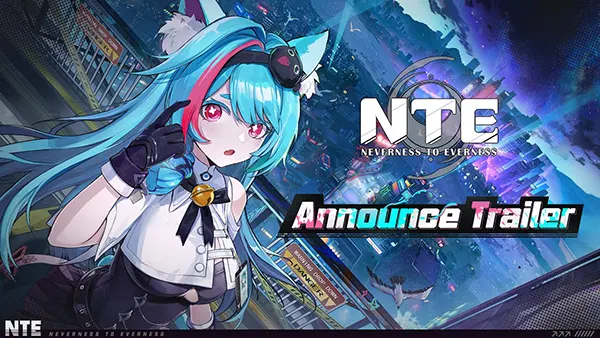
The mobile games market has changed significantly over the past few years, largely driven by the rapid expansion of gacha-driven titles. Against this backdrop, Neverness to Everness Mobile enters the scene with a different proposition: an urban open world experience that attempts to move beyond repetitive mechanics and monetisation fatigue. The key question is whether this shift in direction is enough to satisfy players who have grown increasingly critical of familiar formulas.
From Gacha Fatigue to Open World Ambitions
For much of the early 2020s, mobile gaming was dominated by gacha systems built around character collection, limited-time banners, and probability-based rewards. While commercially successful, this model has also led to a certain level of fatigue among players. Many titles began to feel structurally identical, with progression tied less to skill or exploration and more to resource management and spending patterns.
Neverness to Everness Mobile appears to respond directly to these concerns. Instead of centring gameplay around character acquisition loops, the developers focus on exploration within a dense urban environment. This design choice signals a shift towards systems that reward curiosity and time investment rather than purely monetised progression.
However, moving away from gacha dominance is not without risks. The mobile audience has been conditioned to expect regular content cycles and structured progression systems. Removing or reducing these elements requires the game to offer alternative engagement mechanics that can sustain long-term retention.
How Urban Design Changes Player Expectations
An urban open world differs fundamentally from fantasy or post-apocalyptic settings commonly seen in mobile titles. The city itself becomes a gameplay system, with verticality, traffic systems, and interactive environments shaping how players move and engage with the world.
This type of design introduces a more grounded form of immersion. Instead of vast but often empty landscapes, players navigate compact yet detailed districts filled with activities, side stories, and environmental storytelling. The density of content becomes more important than sheer map size.
At the same time, expectations rise accordingly. Players familiar with console-level open worlds will compare systems such as AI behaviour, environmental interaction, and mission variety. For a mobile title, meeting these expectations requires careful optimisation and thoughtful design compromises.
Technical Challenges on Mobile Hardware
Delivering an open world experience on mobile devices in 2026 still involves significant technical constraints. Despite improvements in chipsets and memory capacity, developers must balance visual fidelity, performance stability, and battery consumption. Any imbalance can negatively impact user retention.
Neverness to Everness Mobile relies on advanced optimisation techniques, including dynamic resolution scaling and selective asset loading. These systems allow the game to maintain acceptable frame rates across a wide range of devices, from mid-tier smartphones to flagship models.
Yet technical performance is not only about graphics. Network stability, loading times, and background processes all influence the overall experience. A seamless open world requires efficient data streaming and minimal interruptions, especially in densely populated urban environments.
Balancing Visual Fidelity and Performance
One of the main challenges lies in achieving a balance between realistic visuals and consistent performance. High-resolution textures, complex lighting systems, and physics simulations can quickly overwhelm mobile hardware if not properly managed.
Developers often prioritise key visual elements that directly affect immersion, such as character animations and environmental lighting, while simplifying less noticeable details. This selective approach allows the game to maintain a visually appealing presentation without compromising stability.
Another important factor is scalability. Providing adjustable settings enables players to tailor the experience to their device capabilities, which is essential in a fragmented mobile ecosystem. Without this flexibility, even well-designed games risk alienating a portion of their audience.

Monetisation Without Overreliance on Gacha
Even with a shift in gameplay focus, monetisation remains a central aspect of any mobile title. The challenge for Neverness to Everness Mobile is to implement revenue systems that feel fair and do not undermine the core experience.
Instead of heavy reliance on randomised rewards, the game appears to experiment with cosmetic purchases, seasonal content passes, and optional expansions. These approaches align more closely with models seen in PC and console games, where spending enhances rather than dictates progression.
This strategy can improve player trust, but it also requires consistent content updates. Without a steady flow of new activities and incentives, even the most balanced monetisation system may struggle to sustain engagement over time.
Player Trust and Long-Term Retention
Trust has become a crucial factor in the modern mobile gaming landscape. Players are more aware of monetisation tactics and are less tolerant of systems perceived as exploitative. Transparent pricing and clear progression paths contribute significantly to a positive reception.
Long-term retention depends on more than just fairness. Regular updates, meaningful events, and community interaction all play a role in maintaining interest. An urban open world offers opportunities for dynamic content, such as evolving districts or time-based activities.
If Neverness to Everness Mobile manages to combine fair monetisation with engaging systems, it could represent a notable shift in how mobile games approach player retention. The outcome will depend on execution rather than concept alone.