
Kamaeru: A Frog Refuge — an Unusual Mobile Game About Ecology and Collection
Kamaeru: A Frog Refuge stands apart from typical mobile titles by focusing on environmental care rather than competition or monetisation pressure. Released as a calm, thoughtful experience, the game centres on building and maintaining a safe habitat for frogs while encouraging players to think about real ecological balance. Its mechanics are deliberately slow, reflective, and grounded in real-world environmental themes.
The Core Idea Behind Kamaeru: A Frog Refuge
At its heart, Kamaeru: A Frog Refuge is a habitat management game where players restore wetlands and create conditions suitable for different frog species. Instead of rapid progression, the game rewards patience and observation, mirroring the gradual nature of real conservation work. Each action, from planting vegetation to managing water quality, has visible consequences.
The game draws inspiration from real amphibian conservation challenges, such as habitat loss, pollution, and climate sensitivity. Frogs are presented not as abstract collectibles but as living creatures with specific needs. This approach adds credibility and educational value without turning the experience into a textbook simulation.
By removing traditional fail states and aggressive objectives, Kamaeru encourages experimentation and mindful decision-making. Players are free to adjust their refuge over time, learning how small environmental changes influence biodiversity and overall ecosystem stability.
How Collection Works Without Traditional Pressure
Frog collection in Kamaeru is based on environmental suitability rather than random chance. New species appear naturally once the habitat meets their specific requirements, such as humidity, vegetation density, or water cleanliness. This system reflects ecological principles rather than artificial rarity tiers.
Each frog species comes with background information inspired by real amphibians, including behaviour patterns and environmental preferences. These details add depth to the collection process and encourage players to understand why certain frogs thrive in particular conditions.
Progression feels organic, as players are not forced to chase specific outcomes. The absence of time-limited events or competitive rankings ensures that collection remains a by-product of thoughtful habitat care rather than a goal driven by urgency.
Environmental Themes and Educational Value
Kamaeru integrates ecological concepts in a subtle but effective way. Players gradually learn about wetland ecosystems, the importance of clean water, and the role amphibians play as environmental indicators. These ideas are embedded in gameplay rather than delivered through overt instruction.
The game reflects real conservation logic, where restoring balance often requires restraint rather than constant intervention. Over-managing the environment can be just as harmful as neglect, a lesson that becomes clear through gameplay feedback.
This approach makes the game suitable for a wide audience, including younger players and adults interested in nature-focused experiences. The educational elements feel relevant and grounded, aligning with modern awareness of environmental responsibility.
Realism in Ecosystem Management
The refuge reacts dynamically to player choices, with plant growth, water levels, and frog populations influencing one another. This interconnected system mirrors real ecological dependencies and reinforces the idea that ecosystems function as a whole.
Seasonal changes and gradual environmental shifts encourage long-term engagement rather than short play sessions. Players often return simply to observe how their refuge has evolved, reinforcing a sense of stewardship.
By avoiding exaggerated mechanics, Kamaeru maintains credibility as a simulation-inspired experience. The game does not promise instant results, reflecting how real conservation efforts require sustained care and observation.
Design Philosophy and Player Experience
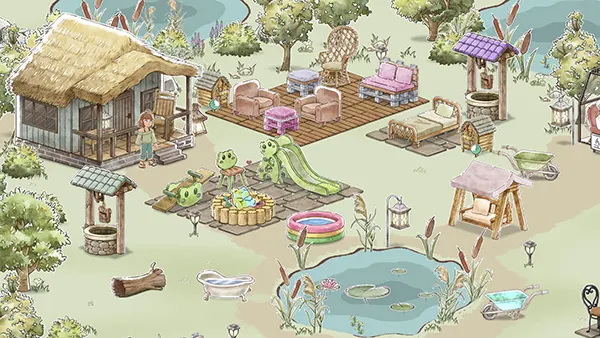
Visually, Kamaeru adopts a soft, hand-crafted style that complements its calm pacing. The environments are detailed without being overwhelming, allowing players to focus on subtle changes rather than constant visual stimulation.
The interface is intentionally minimal, reducing distractions and supporting the game’s reflective tone. Actions are clearly explained, and there is no pressure to optimise every decision, which aligns with the game’s ecological message.
Sound design plays a significant role, with ambient nature sounds reinforcing immersion. The absence of intrusive music or alerts helps maintain a relaxed atmosphere suitable for longer, stress-free sessions.
Why Kamaeru Appeals to Modern Mobile Players
In an ecosystem dominated by fast-paced and monetisation-heavy games, Kamaeru offers an alternative focused on meaning and calm interaction. This makes it particularly appealing to players seeking slower, more thoughtful experiences on mobile devices.
The game respects player time by allowing progress without constant engagement. Habitats evolve naturally, making short check-ins just as rewarding as longer sessions.
Kamaeru: A Frog Refuge demonstrates that mobile games can address environmental themes in a credible, engaging way. Its design shows how interactive media can promote awareness without sacrificing enjoyment or depth.