FRAMED 2 (Android/iOS): A comic-panel puzzle with sideways logic
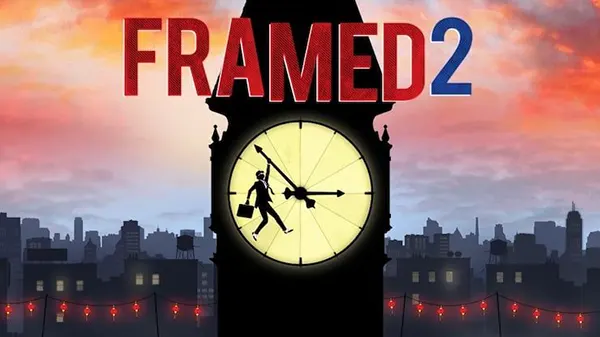
FRAMED 2 is one of those rare mobile games where the “controls” are really a way of thinking. Instead of steering a character, you’re editing a living comic: you swap panels around, then watch the scene play out. When it fails, it doesn’t feel like a random fail state—it feels like you wrote the story wrong.
What FRAMED 2 actually is, and why it still feels fresh in 2026
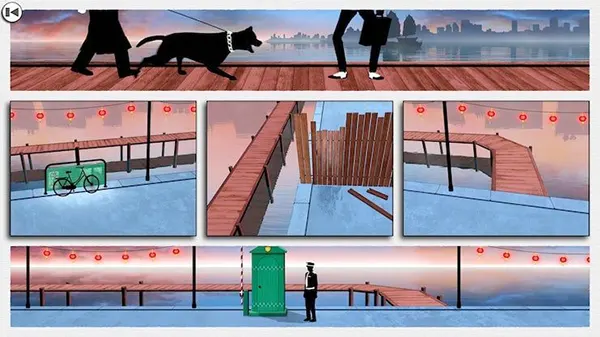
FRAMED 2 is a noir puzzle game built around animated comic panels. Each level is a short sequence of panels that, when played in order, becomes a little chase, heist, or escape. Your job is not to “win” with fast fingers, but to arrange events so the protagonist can get through without being caught, shot, cornered, or simply outsmarted.
The key idea is that every panel is both a moment and a rule. A guard turning a corner isn’t just a visual beat; it’s a timing problem. A door closing isn’t decoration; it changes what routes are possible. You can often tell what must happen, but you still need to discover the specific order that makes it happen cleanly.
Even years after release, it holds up because the design has a clear focus: teach the player to reason in sequences. FRAMED 2 doesn’t rely on endless content or daily tasks. It relies on the satisfaction of making a messy situation suddenly click into a neat chain of cause and effect.
The “panel logic”: cause, timing, and the hidden rules you learn by failing
Most puzzles aren’t about a single correct move; they’re about building a timeline. One panel might create a distraction, another might place the protagonist in the right spot, and a third might ensure the guard is facing the wrong direction at exactly the wrong moment. You’re not moving pieces on a board—you’re rewriting a sequence of consequences.
Timing is the silent mechanic. Some panels resolve quickly, others take longer, and that difference can be the whole solution. If two events must not overlap, you may need a “slow” panel between them. If an enemy needs to arrive later, you’re effectively editing the pace of the scene, not just the layout.
The game also trains you to notice constraints. Certain panels cannot be moved past others because they depend on what happened before. You learn these boundaries the honest way: you try, the scene collapses, and you realise what the story requires. That trial-and-observation loop is the real tutorial, and it’s why the puzzles rarely feel unfair.
Where to play it in 2026, and what to expect on phones and tablets
FRAMED 2 remains a premium, pay-once title on mobile, which is increasingly unusual and, for many players, genuinely welcome. On iOS it has long been listed for iPhone and iPad, with an older baseline requirement of iOS 9.0 and later. On Android it’s available as a paid game and commonly lists Android 5.0+ as the minimum.
Touch controls are the natural fit: you drag panels to swap their positions, then watch the animation to see if your edit works. The interface is built around clarity—panels are readable, movement is deliberate, and the feedback is immediate because you can replay the scene as often as you like.
In practical terms, it’s best on a larger screen if you want maximum comfort. A phone works perfectly well for short sessions, but a tablet makes it easier to scan the entire page of panels at once and spot relationships you missed. That said, the levels are designed to be readable, not crowded, so it never becomes a squinting exercise.
Simple ways to make the experience smoother (especially on modern devices)
First, treat each attempt as an experiment. Don’t keep shuffling randomly; change one thing, watch the outcome, then decide what that outcome tells you. If the character fails in the same spot every time, you’ve found a fixed constraint. If the failure point moves, you’re changing the timeline correctly but not yet cleanly.
Second, look for “anchor” panels—moments that clearly must happen early or late. An escape route, a key handoff, a guard being removed from the scene: these often define the edges of the solution. Once anchors are placed, the remaining panels tend to fall into a smaller set of possibilities, which makes the puzzle feel less like a maze.
Third, use replay deliberately. FRAMED 2 is animated, and the animation is part of the clue system. Watch where eyes turn, where doors block, where pathways open and close. A detail that looks like style can be the hint you need, because the game communicates rules visually rather than through long text prompts.
How to get better at FRAMED 2 without turning it into homework
The best mindset is “edit, watch, learn.” If you approach it like a standard puzzle grid, you can miss what it’s really asking: to understand the scene as a tiny narrative machine. Each run gives information. Each failure is a reason, not a punishment, and you build a mental list of what the scene will and won’t allow.
When you’re stuck, switch from solving to diagnosing. Ask one specific question: “Why does the guard catch me here?” or “What event must happen before this door closes?” That kind of targeted thinking stops you from cycling through endless permutations. It also makes solutions feel earned, because you arrive at them through evidence, not luck.
Finally, keep sessions short if you want the most enjoyment. FRAMED 2 is made of discrete scenes, so it suits ten minutes at a time. Solving a single tricky page, then putting the game down, often works better than forcing progress. Your brain keeps arranging the timeline in the background, and you return with a cleaner view of the problem.
Replay value, difficulty curve, and who it genuinely suits
FRAMED 2 is not a huge game by modern “hours-per-pound” standards, but it doesn’t pretend to be. Its value comes from tight design and the pleasure of an elegant solution. If you like puzzles where the answer is a sequence rather than a single move, it fits beautifully. If you prefer open-ended sandboxes, it may feel too authored.
The difficulty curve is generally fair: early scenes teach you the grammar of panel logic, then later scenes combine those ideas in sharper ways. The game can feel hard when it introduces a new type of interaction, but once you recognise the new rule, the level usually becomes manageable. It’s the kind of challenge that rewards attention more than raw persistence.
It’s also a good recommendation for players who don’t normally play “puzzle games.” Because everything is framed as story beats—escapes, chases, close calls—the logic never feels abstract. You’re not matching colours or rotating blocks. You’re making a comic scene work, and that narrative wrapper makes the thinking feel natural.